Quick Facts
- Authentication Methods: Light Test, Rip Test, Font & Spelling Analysis, Color Saturation, Holo Pattern.
- Market Impact: Fake cards have zero value and can damage a collector's reputation.
- Most Faked Sets: Base Set, Jungle, Fossil, and modern high-value sets like Evolving Skies.
Why Authenticity Matters
In a market where a single Charizard card can be worth over $250,000, knowing how to authenticate your cards is the most important skill a collector can have. The rise of high-quality fakes means that even experienced collectors can be fooled. This guide provides a systematic approach to identifying counterfeit cards, protecting your investments, and ensuring your collection is genuine.
As one collector puts it, "The only thing worse than not having a card is having a fake one."
Key Authentication Tests
Here are the most reliable methods to determine if a Pokémon card is real or fake.
1. The Light Test (Non-Destructive)
This is the go-to test for any collector. Genuine Pokémon cards are constructed with a thin layer of black glue inside, which is opaque.
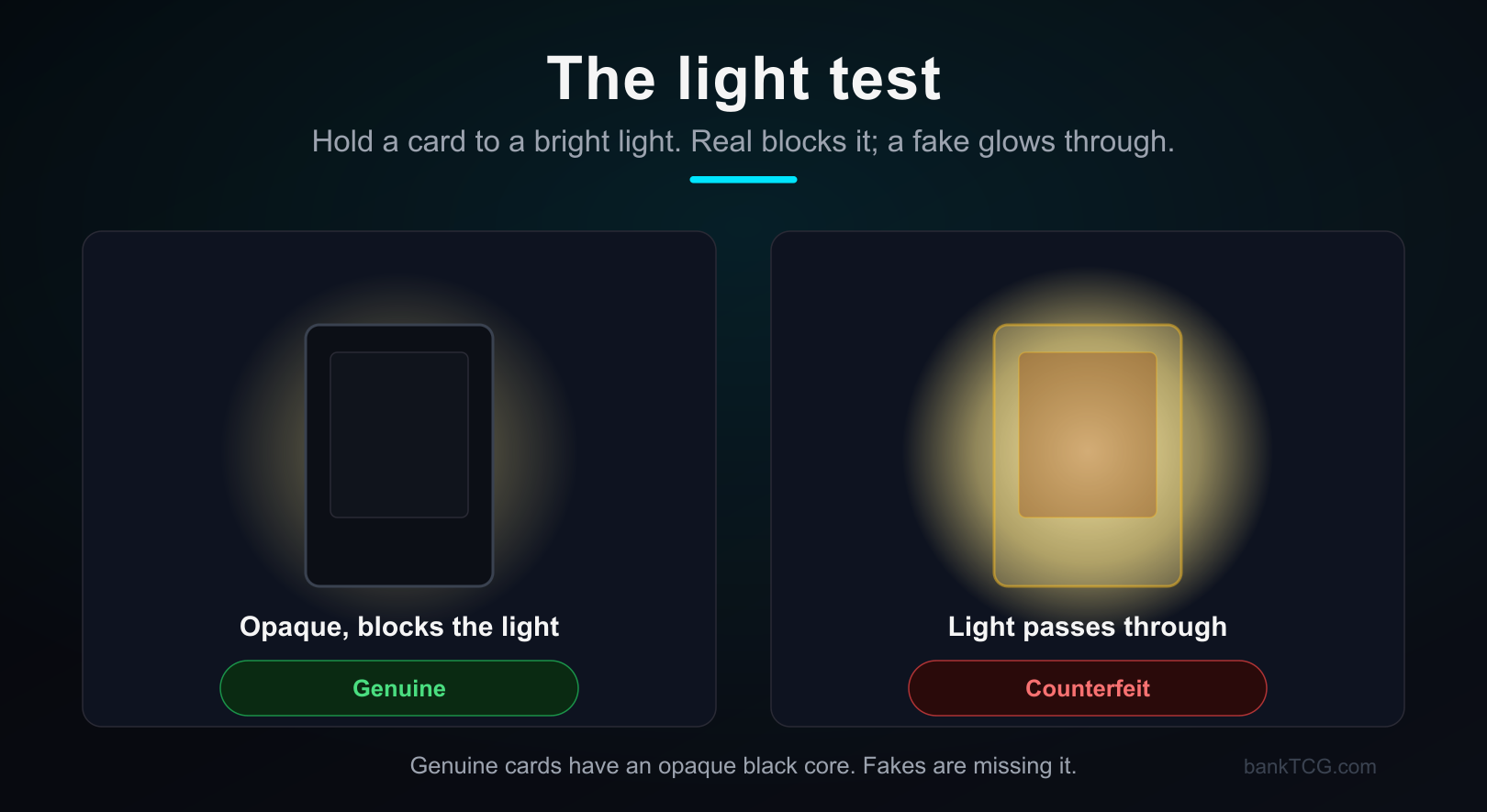
- How to Perform: Hold the card in front of a bright light source (like your phone's flashlight).
- Expected Result (Real): Almost no light should pass through. You might see a faint glow, but you should not be able to see the design from the other side.
- Expected Result (Fake): The card will be translucent. You'll easily see the light and often the artwork from the other side.
2. Color Saturation & Print Quality
Counterfeiters rarely get the colors right. This is especially noticeable on the back of the card.
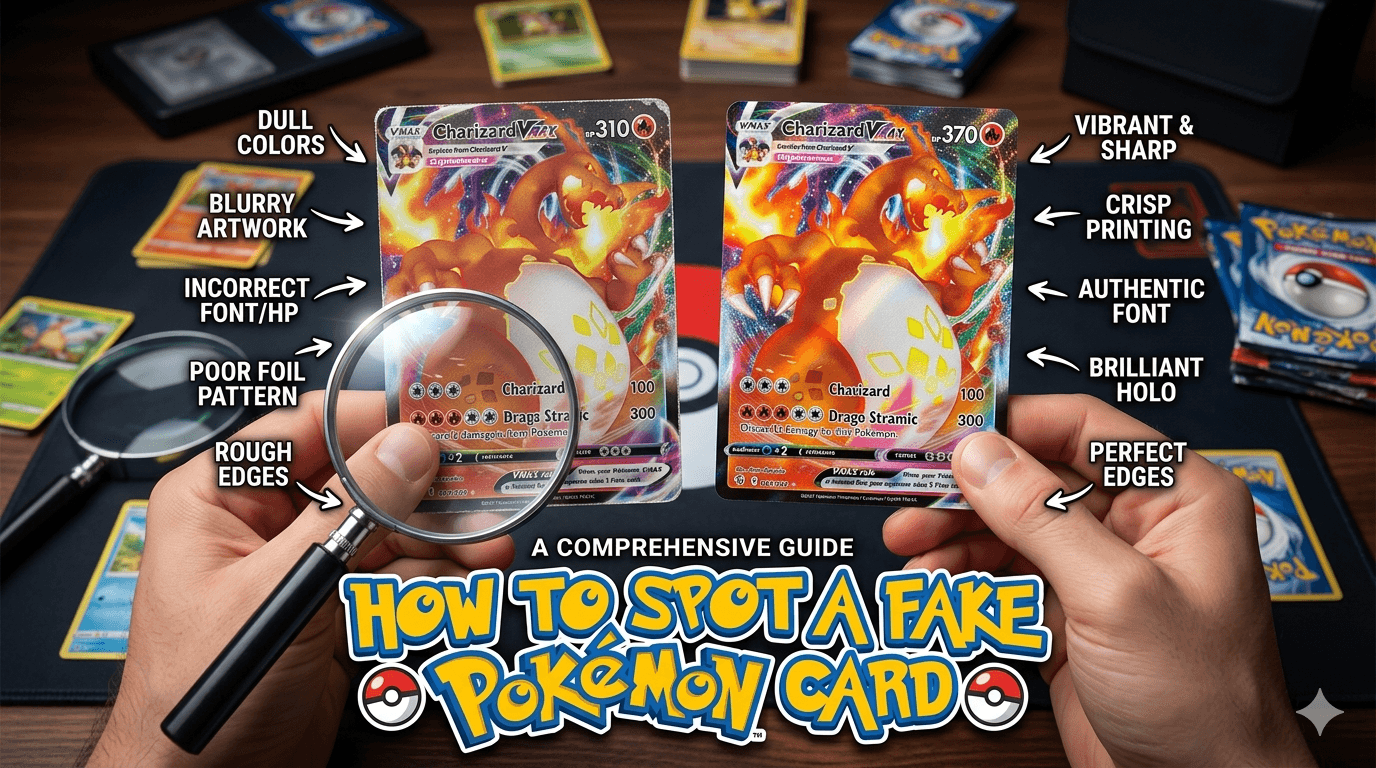
- What to Look For (Front): Colors on fakes are often overly saturated or look washed out. The energy symbols might be the wrong size or shape.
- What to Look For (Back): The blue border on a fake is typically a single, flat shade of light blue. A real card has a more complex, multi-toned blue pattern.
3. Font, Spelling, and Symbols
The Pokémon Company has extremely high printing standards. Errors are a major red flag.
- Font: Check the font used for the HP value and attack text. Fakes often use a generic font that is too thin or rounded.
- Spelling: Look for spelling mistakes in the Pokémon's name or attack descriptions.
- Accents: The most common error is the missing accent on the "é" in "Pokémon."
4. The Holo Pattern
Holographic cards are the most common targets for fakes.
- Real Holo: The holographic pattern is distinct and lies underneath the card text and borders. The shine is textured and follows a specific pattern (e.g., vertical lines on modern cards).
- Fake Holo: Often, the entire card has a glossy, buttery sheen that covers everything, including the text boxes and borders. The pattern is often flat and lacks depth.
5. The Rip Test (Destructive - Use with Caution!)
This is the ultimate confirmation but requires destroying the card. Only use this on a card you are certain is fake.
- How to Perform: Carefully tear the card in half.
- Expected Result (Real): You will see a distinct black line running through the center of the torn edge. This is the internal glue layer.
- Expected Result (Fake): The inside of the card will be plain white cardboard.
Market Analysis: The Cost of Fakes
The market for high-value Pokémon cards is built on trust and authenticity. A fake card, regardless of how convincing it looks, has a market value of $0. Furthermore, selling counterfeit cards, even unknowingly, can lead to bans from platforms like eBay and TCGplayer.
Protecting yourself from fakes is essential for protecting your collection. Fakes aren't limited to raw cards either; counterfeit graded slabs exist too, so cross-check any slab's label against the PSA Label Museum to confirm the label style matches its cert year. Once you've confirmed your cards are authentic, learn about PSA vs BGS grading services to maximize their value.
How Bank TCG Helps Protect Against Fakes
While the Bank TCG scanner is primarily designed for card identification and grading, it can help you verify authenticity by comparing your card's characteristics to our database of genuine cards. If the app struggles to recognize a card that should be easily identifiable, it may be a counterfeit.
Additionally, our features analyze card details like font, color saturation, and holo patterns, all key indicators used in fake detection. Before investing in expensive cards, especially from our list of most valuable Yu-Gi-Oh! cards, always authenticate them using these methods.
Frequently Asked Questions
What is the easiest way to spot a fake Pokemon card?
The light test is the quickest and most reliable non-destructive method. Hold the card up to a bright light source. If light passes through easily and you can see the design from the other side, the card is fake. Genuine Pokemon cards have an opaque black glue layer that blocks light.
Are all Pokemon cards from China fake?
No, many authentic Pokemon cards are printed in China and other countries. The Pokemon Company uses multiple printing facilities worldwide. However, most counterfeit cards do originate from China due to access to printing technology. Always authenticate using the light test, color saturation check, and font analysis rather than relying on country of origin.
Can grading companies detect fake Pokemon cards?
Yes, professional grading companies like PSA and BGS are experts at detecting counterfeits. They will not grade fake cards and will return them ungraded. However, grading fees are not refunded for rejected cards, so it's crucial to authenticate your cards before submitting them for grading.
Do fake Pokemon cards have texture?
Most modern counterfeit Pokemon cards lack the proper texture found on authentic cards. Real Pokemon cards have a specific card stock feel and texture, especially on holographic cards where the holo pattern has depth. Fakes often feel smoother or have an artificial glossy coating that covers the entire card, including text boxes.
Where are fake Pokemon cards most commonly sold?
Fake Pokemon cards are most commonly found on unregulated platforms like Alibaba, DHgate, Facebook Marketplace, and eBay listings from unverified sellers. They're also prevalent at flea markets and through private sellers on social media. Always buy from reputable sources like authorized retailers, established TCG stores, or verified sellers on platforms like TCGplayer that have buyer protection policies.